

Playground Mulch vs Pea Gravel: How Safety Standards Have Changed
Why Playground Surfacing Matters
Falls are the leading cause of injury on any playground. Proper playground surfacing is designed to reduce the severity of those falls, often making the difference between a minor injury and something more serious.
In older playground design, materials like pea gravel were commonly used. At the time, safety expectations were lower and standards were less defined. Today, modern playground design follows strict safety and accessibility guidelines, which has changed how materials like mulch gravel and even rock are evaluated.
Comparing playground mulch vs pea gravel clearly shows how playground standards have evolved. What was once considered acceptable playground surfacing is no longer considered compliant.
Key Takeaways:
- Playground mulch is designed for impact protection and can meet modern playground safety standards when properly installed and maintained.
- Pea gravel is no longer commonly used for playground safety surfacing because it can compact, shift, and create accessibility concerns.
- Engineered wood fiber and rubber mulch provide more consistent cushioning and performance than pea gravel.
- The lowest upfront cost isn't always the best long-term value. Maintenance, accessibility, safety performance, and replacement should all factor into the decision.
- The right playground surface depends on more than appearance. Fall height, accessibility requirements, maintenance, and long term performance all matter.
Thank you for your submission! Your Playground Planning Guide will be sent to your email!
What is Playground Mulch?
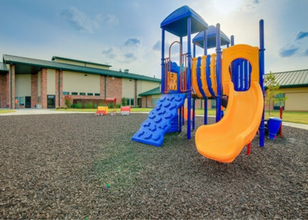
Playground mulch is a loose-fill playground surface design specifically to cushion falls and improve safety. Unlike basic gravel, rock materials, or wood chips not designed for playground use, mulch is engineered to provide consistent impact absorption across a playground.
Common Types of Playground Mulch
Engineered Wood Fiber (EWF) is designed to interlock to create a more stable playground surface. It provides consistent cushioning across the playground and can meet accessibility standards when properly installed and maintained.
Rubber mulch is made from recycled materials and offers long-term durability and strong impact absorption. It is heavier than wood mulch, so it tends to shift less than wood and pea gravel.
These mulch options exist because modern playground standards require materials that perform consistently, something pea gravel cannot guarantee.
Pros and Cons of Playground Mulch
| Pros | Cons | |
|
|  |
These are manageable tradeoffs. Importantly, the disadvantages of mulch do not prevent it from meeting modern playground safety standards.
What is Pea Gravel?
Pea gravel is a small rounded rock material often used in landscaping. While pea gravel was once used in playground spaces, it is now rarely considered appropriate for modern playground surfacing. Its small size can also present a choking hazard for younger children.
Pea gravel may look soft, but as a playground surface it behaves differently than engineered mulch. Over time, pea gravel compacts and creates a harder surface that does not provide consistent protection.
Pros and Cons of Pea Gravel
| Pros | Cons |
|
|
While pea gravel and rock materials have benefits in landscaping, they do not meet the expectations of modern playground safety.
Key Differences Between Each Surface Material
Safety and Fall Protection
Playground Mulch is a surface material designed to absorb impact. Pea gravel, by comparison, becomes compacted and less effective overtime. This is one of the main reasons mulch is considered better for playground safety today.
Maintenance and Long-Term Performance
Both mulch and gravel require maintenance, but the outcome is different. Mulch can be raked, replenished, and maintained at the proper depth to preserve its safety performance. Gravel also requires maintenance, but redistributing it does not improve its impact protection.
Overtime, pea gravel loses performance, while mulch can maintain it with proper upkeep.
Accessibility
Modern playground standards require accessible surfaces. Mulch can meet these standards when properly installed and maintained. Pea gravel cannot provide the same stable surface for wheelchairs or strollers.
Appearance
Mulch offers a natural or customizable look, while gravel provides a more limited visual style. Although appearance still matters when designing a playground, modern playground design prioritizes safety and performance over aesthetics.
Environmental Impact
Wood Mulch is biodegradable, while rubber mulch gives recycled materials another use. Pea gravel and rock, on the other hand, require mining. Weed growth and other site maintenance may also need to be considered depending on the surfacing material and installation.
Environmental considerations now factor into playground decisions, but safety still comes first.
How Playground Safety Standards Have Evolved
Fall Height and ASTM Standards
Modern playgrounds follow ASTM standards for impact attenuation. These standards measure how well a surface absorbs a fall. Mulch can meet fall height requirements when installed correctly, and rubber mulch can provide strong performance at higher fall heights. Pea gravel, however, becomes less reliable as it compacts.
ASTM F1292 testing is not just a guideline, it is a performance benchmark that helps designers, schools, and municipalities choose materials that actively reduce injury risk. Surfaces are tested at specific depths and fall heights to ensure consistent results, which is something pea gravel cannot reliably achieve.
As safety expectations increased, the industry shifted away from materials that could not be tested consistently. This is one of the clearest reasons why pea gravel is no longer considered a compliant playground surfacing option in most modern projects.
This shift explains why gravel is no longer widely used in playground design.
Injury Risk
The goal of a playground surface is not to prevent falls but to reduce the severity of injuries when falls happen. Mulch absorbs impact, while pea gravel can be harder as it compacts over time. This makes gravel a higher risk option compared to modern playground mulch.
Pea gravel can also become a concern for younger children, as the small pieces can become a choking hazard if put in the mouth.
Long Term Performance
Playground materials must perform consistently. Mulch can maintain its cushioning with proper upkeep, while pea gravel loses effectiveness as it compacts and shifts.
Installation and MaintenanceInstallation Depth
Even at proper depth, gravel does not perform as well as mulch in a playground setting. MaintenanceMulch requires regular raking and period replenishment to maintain the appropriate depth and performance. Pea gravel must also be regularly redistributed as it moves throughout the playground, but this maintenance does not solve its safety limitations. | 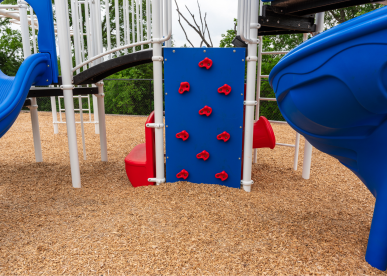 |
Choosing the Best Surface for Your Playground
Playground Mulch
Playground mulch is a strong choice for modern playground equipment, areas requiring fall protection, and accessible playground environments. When properly installed and maintained, it provides the cushioning needed beneath play equipment while offering a more stable and reliable surface than pea gravel.
Pea Gravel
Pea gravel still has value around a site, particularly for landscaping, decorative areas, and low-risk spaces outside the main playground. The issue isn't that pea gravel has no useful applications, it's that it isn't the best surface for areas where children are playing on elevated playground equipment and fall protection is required.
Cost and Long Term Value
Upfront Cost
Pea gravel typically has the lowest upfront cost, with wood mulch also offering an affordable option for playground surfacing. Rubber mulch generally has a higher initial cost, but the price of the surface material is only one factor to consider when comparing options.
Long-Term Cost
Over time, the cost differences between the materials can change. Rubber mulch typically offers the longest lifespan, while wood mulch has a moderate ongoing cost because it requires periodic replenishment. Pea gravel may initially seem inexpensive, but displacement and replacement can create additional costs over time.
For example, a playground that installs pea gravel may save on initial cost, but over time the gravel will scatter, mix with soil, and require frequent redistribution or even full replacement. In contrast, mulch maintains a more consistent surface with predictable maintenance cycles.
When factoring in labor, replenishment, and safety performance, mulch often delivers better long-term value despite a slightly higher upfront cost. This is especially important for schools, public spaces, and commercial playgrounds that must meet safety standards year after year.
While gravel appears to have a lower cost upfront, it does not provide the same long-term value in a playground environment.
Conclusion
Playground safety has changed significantly over time. Materials like pea gravel were once common in playground design, but modern standards have redefined what is considered safe.
Today, playground mulch is designed to meet strict safety, accessibility, and performance requirements. It provides consistent impact absorption and supports a safer playground environment.
Pea gravel, while useful in landscaping, cannot meet these expectations. Its tendency to compact, shift, and lose cushioning makes it unsuitable for modern playground safety surfacing.
For decision makers like schools, parks departments, and childcare providers, this shift is not just about preference, it is about liability, compliance, and long-term safety outcomes. Choosing a surface that meets current standards helps reduce injury risk and ensures the playground remains compliant over time.
Ultimately, selecting the right material is an investment in both safety and durability. While gravel may seem like a low-cost option upfront, modern playground design prioritizes materials that perform consistently and protect users over the long term.
As playground design continues to evolve, the focus remains clear. Safety, accessibility, and long term performance matter more than ever, and that is why materials like mulch have replaced gravel in today's playground spaces.